Content distribution is how you publish, share, and promote your content so it reaches the right audience through the right channels. Making good content is half the job. Getting it in front of the people who matter is the other half, and it is where most B2B teams lose value.
What is content distribution?
Content distribution is the process of delivering your content to your audience across channels, touchpoints, and formats. A blog post, a video, or a report only works when people see it. Distribution is the plan that gets each piece to the right audience, on the right channel, at the right time.
Think of it in two parts: the content you make, and the system that moves it. Most teams over-invest in making and under-invest in moving. The result is good work that almost no one sees.
The three content distribution channels
Every channel falls into one of three types. A strong plan uses all three.
Owned channels are the ones you control: your website, blog, email list, and your own social profiles. You decide what goes out and when, and the audience is yours to keep.
Earned channels are where others share or feature your content: press coverage, mentions, guest articles, reviews, and shares. You do not control these, but they carry the most trust because someone else is vouching for you.
Paid channels are where you pay for reach: paid social, search ads, sponsored content, and paid newsletters. Paid is the fastest way to put a proven piece in front of more of the right people.
The pattern that works: publish on owned, amplify with paid, and build earned over time through quality and relationships.
How content distribution works
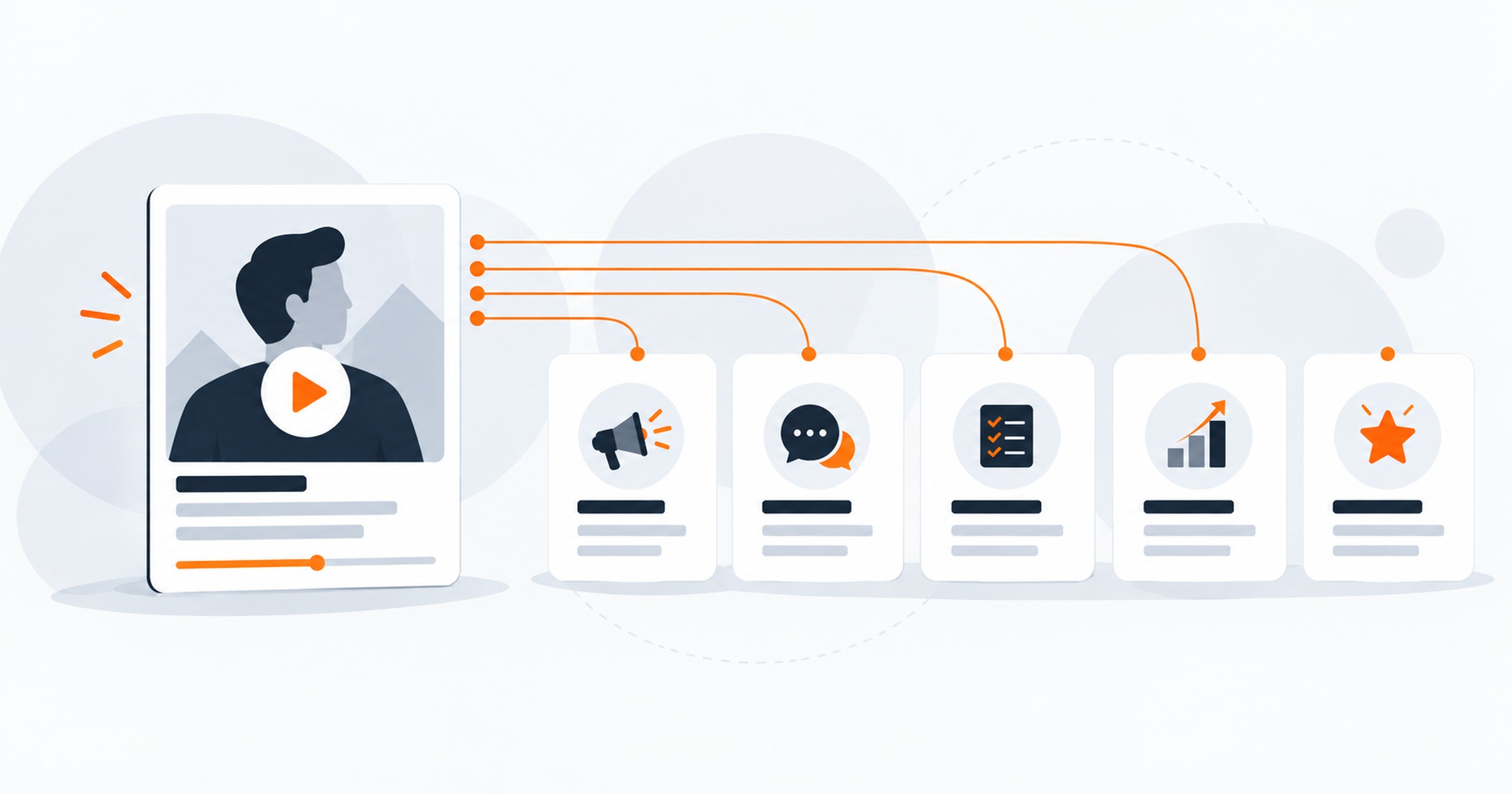
Distribution follows a simple flow. You start with one strong piece of content. You adapt it to fit each channel, because a LinkedIn post, an email, and a video need different shapes. You publish on a schedule rather than all at once. Then you measure what each channel returns and put more behind what works.
The mistake is treating distribution as one share per channel and moving on. One asset can run for weeks across formats and channels if you plan it that way.
How to build a content distribution plan
Here is a practical way to set one up. You can do this with your current team and tools.
- Pick your core channels. Choose the two or three where your buyers actually spend time. For most B2B that is your website, email, and LinkedIn. Ignore the rest for now.
- Map each piece to a channel and a format. For one report, plan the blog post, the email, three LinkedIn posts, and a short video up front, before you publish anything.
- Build a simple calendar. Decide what goes out, where, and when, for the next four weeks. A shared sheet is enough. Space each piece out so one asset earns attention over days, not minutes.
- Repurpose on purpose. Turn one strong piece into five smaller ones: a blog post, a video clip, a few social posts, an email, and a slide. This is where most of the value hides.
- Add paid behind proven content only. When a piece performs on owned channels, put a small budget behind it to reach more of the same audience. Do not pay to promote something that has not earned attention organically.
- Set a cadence you can keep. A steady, smaller plan beats a big push you cannot sustain.
How to measure content distribution
Track the metrics that connect to revenue, not vanity numbers. Reach and impressions tell you how far a piece traveled. Engagement, such as clicks, saves, and replies, tells you whether it landed. Traffic to your site and email signups tell you whether it moved people closer. Qualified conversations and pipeline tell you whether it paid off.
Review these monthly. Cut the channels that do not return, and reinvest in the ones that do.
Common mistakes to avoid
- Publishing once per channel and stopping.
- Posting the same format everywhere instead of adapting it.
- Chasing every new platform instead of owning a few.
- Measuring views instead of pipeline.
- Paying to boost content that has not earned organic attention.
How Room4 Media helps
We make the content and the assets that distribution depends on, built so one piece works across channels and formats.
Content distribution: FAQ
What is content distribution?
Content distribution is the process of publishing, sharing, and promoting your content so it reaches the right audience through owned, earned, and paid channels.
What are owned, earned, and paid channels?
Owned channels are ones you control, such as your website, blog, and email list. Earned channels are where others share or feature your content, such as press and mentions. Paid channels are where you pay for reach, such as paid social and search ads.
How do you measure content distribution?
Track reach, engagement, traffic and signups, and finally qualified conversations and pipeline. Review monthly, cut what does not return, and reinvest in what does.
What is a content distribution strategy?
It is a plan that maps each piece of content to specific channels and formats, sets a publishing cadence, repurposes one asset into many, and puts paid budget behind proven pieces.